



High Water Pressure in Your Athens Home
The Quiet Threat Behind the Walls
High water pressure is one of the most misunderstood problems in residential plumbing. Homeowners often tell me they love the strong shower and assume more pressure means a better plumbing system. From a Master Plumber’s point of view, uncontrolled pressure means every water-bearing component is working harder than it should. The stress is present when you brush your teeth, when the washing machine fills, and even when the house is quiet at two in the morning. Plumbing standards treat 80 psi as an important maximum threshold for residential static pressure, but a good evaluation is not limited to asking whether one reading is barely under that number. We want stable, usable pressure that serves the fixtures properly without punishing valves, connectors, appliances, and the water heater.
Excessive pressure can enter a home directly from the public water main, but it can also develop because the home’s pressure-reducing valve is worn, blocked, improperly adjusted, or no longer responding consistently. Municipal pressure may vary with elevation, system demand, pumping conditions, and time of day. In a closed system, pressure can rise when the water heater warms the water and that expanding volume has nowhere to go. This is called thermal expansion. A properly selected and charged expansion tank or another approved method may be needed to control it. That is why replacing a regulator without checking expansion, or adding an expansion tank without verifying the regulator and system pressure, can leave the real problem unresolved.
The damage usually appears component by component. Toilet fill valves start hissing or running. Faucet cartridges wear out early. Ice-maker and refrigerator lines seep. Washing-machine hoses bulge. Water-heater relief valves discharge. Solenoid valves in appliances close quickly and send a pressure wave through the piping. Over time, joints and supply connectors that were already aging can become the first failure point. High pressure can also waste water because many fixtures deliver more flow than the homeowner needs. The expense is not only the part that breaks. It can include damaged flooring, cabinets, drywall, personal property, mold remediation, and the disruption of having part of the home opened for drying and repair.
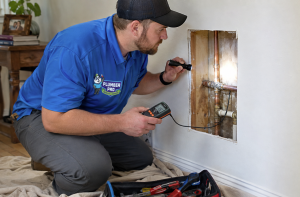 Listen and look for patterns. A sharp bang when the dishwasher or washing machine stops filling may be water hammer. A toilet that repeatedly needs a new fill valve may be reacting to pressure. A faucet that drips again shortly after a quality repair deserves a system-wide look. Other clues include sudden changes in shower force, rattling pipes, recurring leaks at fixture supplies, a relief pipe that releases water, or pressure that seems unusually strong late at night. One symptom by itself can have several causes. What catches a plumber’s attention is repetition across different fixtures, especially when problems return after individual components have already been replaced.
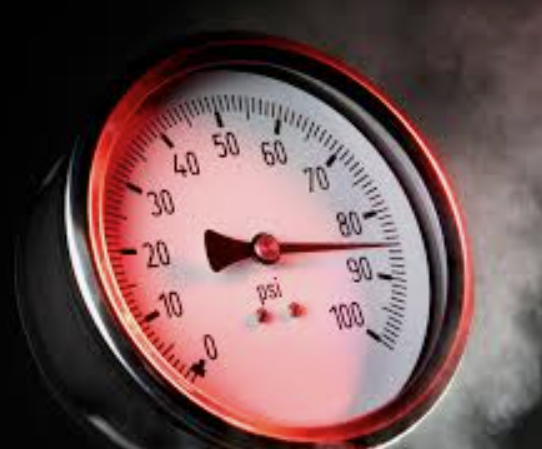
A homeowner can purchase a threaded pressure gauge and attach it to a compatible exterior hose connection or laundry faucet, but the test has limits. The gauge must be in good condition, the connection must reflect system pressure, and water use inside the house should be controlled during the reading. A gauge with a recording or lazy hand can show pressure spikes over time. A professional assessment may compare static pressure with pressure under flow, test at more than one location, evaluate overnight increases, and observe what happens while the water heater runs. We also confirm that valves are fully open, filters are not restricted, and the symptoms are not being caused by a localized obstruction.
Correcting the problem may involve replacing or adjusting a pressure-reducing valve, but the repair has to match the system. The valve must be properly sized, installed in the correct orientation, accessible for service, and adjusted with an accurate gauge. If thermal expansion is present, the expansion-control device must be suitable for the water heater and system volume, and an expansion tank must have the correct air charge before it is placed into service. Loose piping or quick-closing valves may require additional water-hammer control. A quality repair is verified after installation by retesting pressure and operating fixtures and appliances under realistic conditions.
The best time to address high water pressure is before a hose bursts or a hidden connection begins leaking. If your Athens-area home has banging pipes, recurring fixture failures, a dripping relief line, or pressure that feels excessive, Plumber Pro Service & Drain can test the system and explain the results in plain language. We are a local, family-owned plumbing company serving Athens and the surrounding counties, led by Georgia Master Plumber Sam Ivey. Our goal is not to sell a collection of unrelated parts. It is to identify why the pressure is unstable and recommend the repair that protects the whole plumbing system. Call (706) 769-7761 to schedule service. Controlled pressure is not about giving up a good shower. It is about getting reliable performance without forcing your home to pay for it later.
 Always know that when you call Plumber Pro Service & Drain in Athens, Georgia, you are calling on Athens’ Best Plumber! Yes, you read that correctly! Plumber Pro Service & Drain has been rated by Best Plumbers as being the Best Plumber in Athens, Georgia. In fact, Plumber Pro Service & Drain has more 5 star Google Reviews than all the other Athens plumbers, combined! When you call on Plumber Pro Service & Drain, you are calling the Best Plumber in Athens.