



Is Your Water Heater About to Fail? Warning Signs Athens Homeowners Should Know
A Master Plumber’s Guide to Leaks, Ruptures, Relief Valves, and Safe Replacement
A water heater is easy to forget because it works in the background, but a conventional tank holds a substantial amount of hot water under pressure and is connected to a supply that can keep feeding a leak. When the steel tank loses integrity, the damage may begin as a slow seep or arrive as a sudden release. If the unit is in an attic, finished closet, interior utility room, or upper floor, even a modest leak can affect several areas of the home. Beyond water damage, the equipment may involve electricity, gas, combustion, venting, and scalding temperatures. As a Master Plumber, I consider the water heater part of the home’s safety system, not just a convenience appliance.
Most tank failures begin with corrosion. The tank is protected by a glass-like lining and a sacrificial anode rod, but neither lasts forever. Water chemistry, operating temperature, installation quality, maintenance history, pressure, thermal expansion, sediment, and usage all affect how the unit ages. Sediment can collect at the bottom, trap heat, create popping noises, and reduce efficiency. Corrosion can attack threaded connections, valves, or the tank itself. A water heater does not have a universal expiration date, and age alone does not tell the entire story. It does tell us to inspect more carefully, especially when the history is unknown or the unit has been sitting in a location where a leak would be especially destructive.
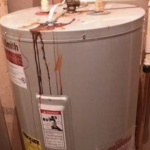
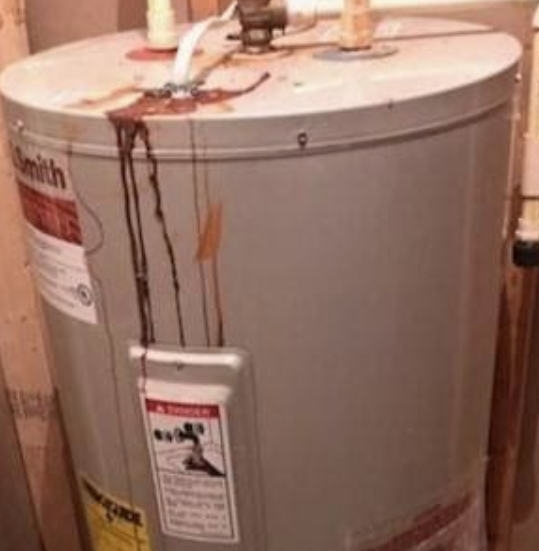
 Watch for rust streaks, dampness, or mineral deposits at the base and around fittings. Pay attention to rusty or cloudy hot water, reduced hot-water capacity, fluctuating temperature, unusually long recovery, rumbling, popping, or sizzling sounds. A pilot that will not remain lit, scorching near a burner area, damaged venting, nuisance breaker trips, or an electrical smell requires prompt professional attention. So does water from the relief discharge line. Some conditions are repairable, such as a leaking connection or replaceable control. Water coming through the tank shell usually means the vessel itself has failed. No amount of sealant on the outside can restore the strength of corroded steel.
The temperature-and-pressure relief valve deserves special respect. It is designed to open if unsafe temperature or pressure develops, helping prevent a catastrophic tank failure. Never cap, plug, reduce, or obstruct the discharge line, and never ignore a valve that repeatedly releases water. The discharge may be caused by excessive supply pressure, thermal expansion, overheating, a defective valve, or an installation problem. Gas-fired equipment adds another layer of concern. Yellow or unstable flames, soot, damaged vent connectors, signs of backdrafting, or a carbon-monoxide alarm should be treated as safety issues. Leave the area and contact the appropriate emergency or utility service if you smell gas or suspect dangerous combustion gases.
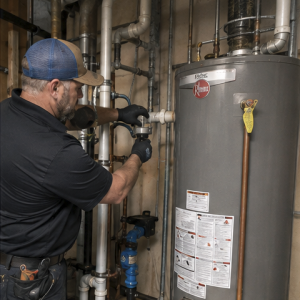 When a water heater is actively leaking, do not walk through standing water to reach electrical equipment. If it is safe, close the cold-water supply valve feeding the unit. An electrical disconnect or breaker should be operated only from a dry, safe location, and gas controls should not be manipulated if there is any odor of gas or uncertainty about the correct procedure. Keep people away from hot discharge water and call a licensed plumber. If the leak is large and the local shutoff will not close, use the home’s main water valve. These are situations where knowing the shutoff locations in advance can save critical minutes.
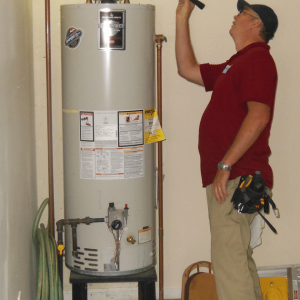
A professional evaluation should examine more than the puddle. We check the source of the water, tank and connection corrosion, operating temperature, system pressure, expansion control, shutoff valve, drain valve, relief valve and discharge piping, venting or electrical connections, clearances, drain-pan arrangement, and the condition of nearby materials. If replacement is needed, the new unit should be selected for the household’s demand, available fuel or electrical capacity, physical location, venting requirements, efficiency goals, and service access. Tank, tankless, heat-pump, and other water-heating options each have advantages, but the right choice depends on the home rather than the product with the loudest advertising.
 Preventive care is most valuable when it is tailored to the equipment and local conditions. Periodic inspection can identify corrosion, pressure problems, unsafe relief piping, venting defects, and small leaks while the homeowner still has time to plan. Maintenance such as flushing or anode service should follow the manufacturer’s instructions and account for the unit’s condition, because aggressively disturbing a severely neglected old tank can sometimes expose an existing weakness. Plumber Pro Service & Drain provides water heater repair, replacement, and emergency plumbing throughout the Greater Athens area. If you see moisture, rust, relief-valve discharge, or a sudden change in performance, call (706) 769-7761. We will help you determine whether the unit can be safely repaired or whether replacement is the responsible way to protect your home. Also know that when you call Plumber Pro Service & Drain you are calling the Athens plumber that is recommended by the #1 plumbing directory, Best Plumbers.